1. A tanning ledge
A shallow ledge offers a place to enjoy the water without committing the whole pool to lounging. Plan its depth and dimensions around the intended use and compatible furniture. A ledge takes up part of the swimming footprint, so review both together.
2. An integrated spa
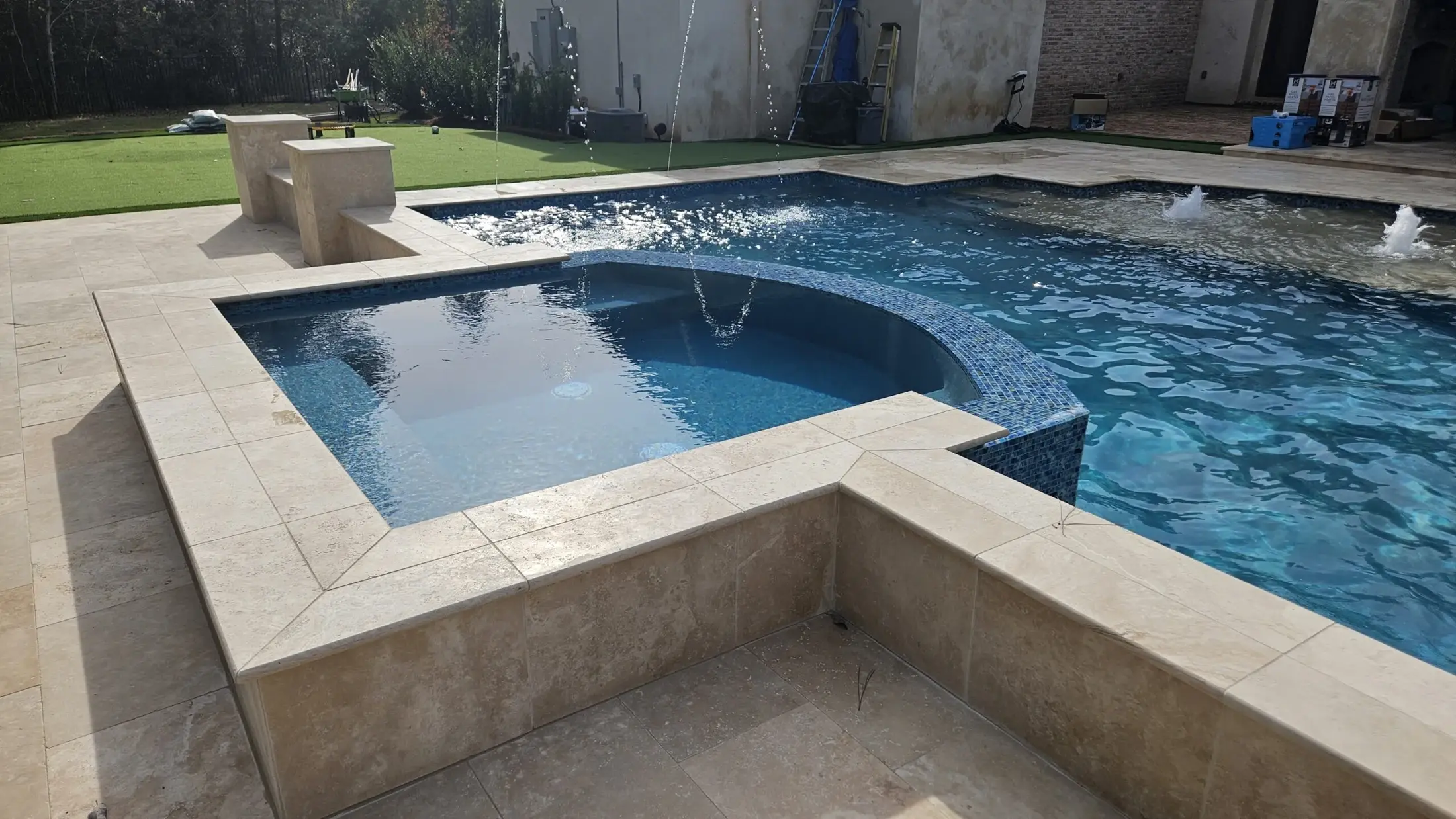
A spa can be quiet and recessed or raised to become the center of the composition. Consider how you will enter it, where its overflow will go, and how it relates to the main seating area.
3. A considered water feature
Scuppers, a spillway, or a simple water wall can create movement without overpowering the yard. Think about the sound from the patio and inside nearby rooms. Ask about operation and upkeep as part of the design discussion.
4. Lighting with restraint
Plan the evening view from the house and the gathering spaces. Thoughtful lighting can reveal steps, accent the water, and support circulation. Have a qualified professional design and install the electrical work to the applicable requirements.
5. Tile that ties the space together
Waterline tile is a small area with a large visual influence. Compare it alongside the interior finish and coping so the pool reads as a complete composition.
6. Comfortable coping
The edge is a place you touch, sit, and cross. Look at profile, texture, color, and how it transitions to the deck. View samples in the sun rather than choosing from a catalog image alone.
7. Generous terrace space
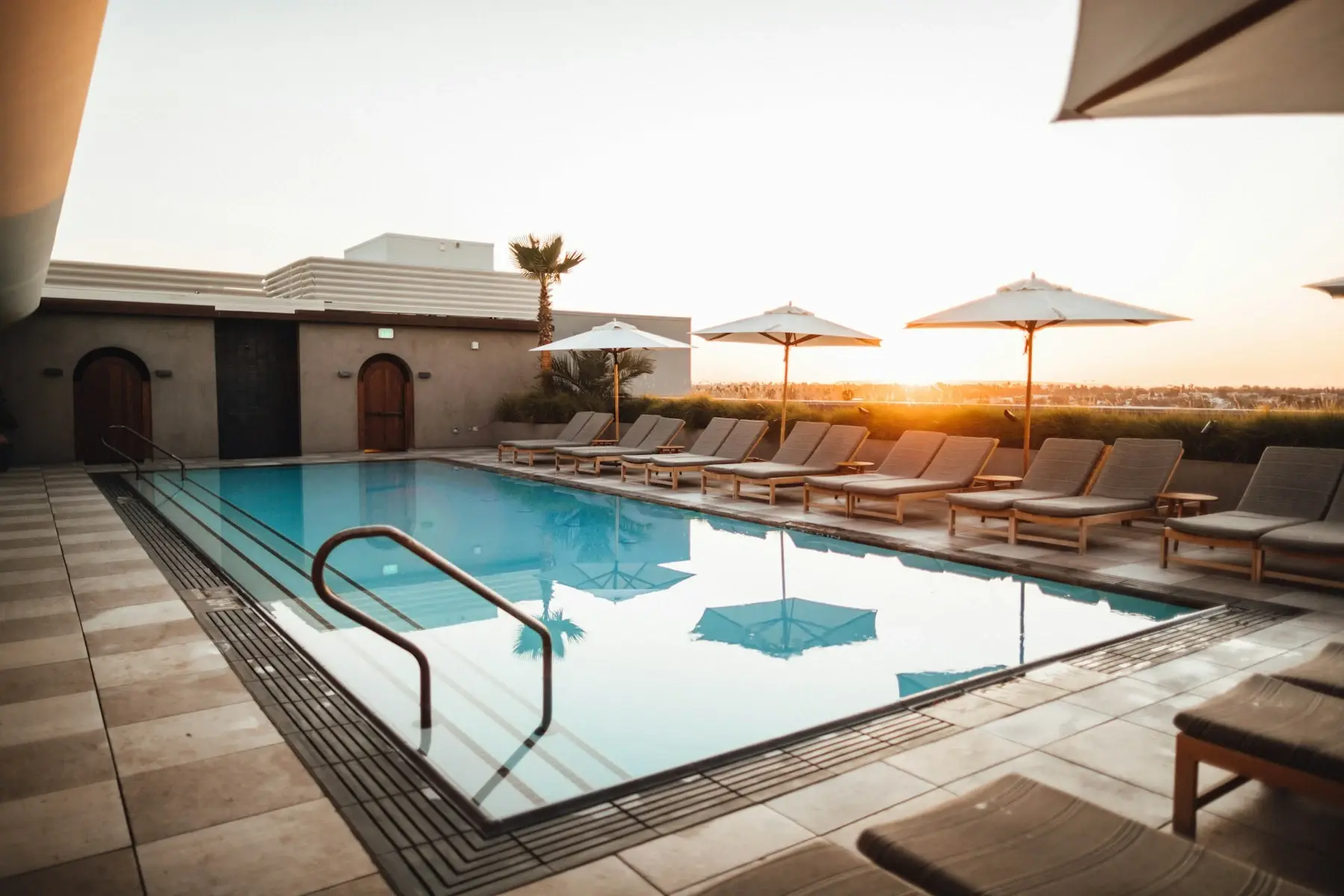
Allow room for loungers, dining chairs pulled away from a table, and an unobstructed walking route. Extra pool length is rarely a good trade if it leaves the surrounding living area cramped.
8. Built-in seating
A well-positioned bench can make conversation in the water more natural. Discuss placement, depth, and how it affects the open swimming space.
9. Shade where you actually need it
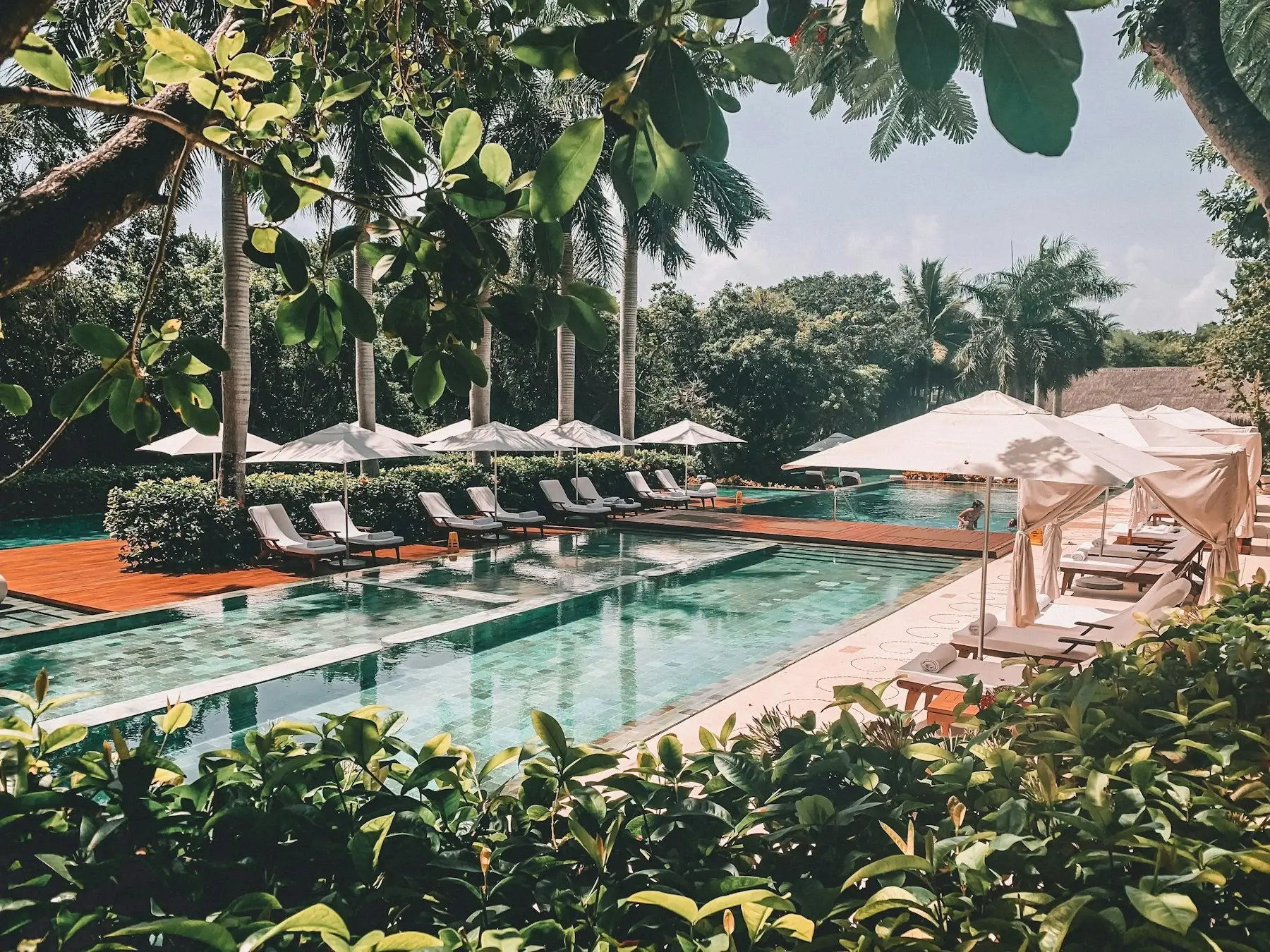
Study the yard at the times you expect to use it. An umbrella sleeve, pergola, or shaded terrace may make a smaller pool area far more enjoyable. Coordinate any structure with the layout and applicable setbacks.
10. A plan for a cover
Think about storage and access for a cover before finishing the deck. EPA WaterSense identifies covers as a way to reduce evaporation. Energy or water-saving covers are not automatically safety covers; discuss the intended function and suitability with your builder.
Choose the features that earn their place
The most successful pool is not the one with the longest feature list. Prioritize the details that support your routine, then bring them together with a consistent palette. Clearwater can help you plan a custom pool and spa that feel considered from the first swim to the last light of the evening.
Sources & further reading
Design observations are editorial guidance. These resources support the technical, safety, and permitting topics discussed above.
Editorial review completed October 2, 2026. First published June 26, 2025; revised for this edition.